The Giant Panda, a majestic creatures iconic throughout the world, is endangered. Pandas are incredibly important in ecosystems. As a top pollinator and vegetation-controlling animal, without these creatures, farming in China would be nearly impossible. But for those of us not living in China, why should we care that it’s going extinct? Read this post to find out!
At the end of this post, please consider donating to WWF. Though I am not associated to them in any way, I truly believe that they are leading the effort to bring back Giant Pandas.
Happy reading!
The Giant Panda
China considers the giant panda a national treasure – and for good reason. These massive creatures are extremely effective pollinators, and allow farms in China to grow produce. So how is the Giant Panda behind all this?
Giant Pandas pollinate by rubbing their fur across plants as they walk by. Seeds, pollen, and berries collect on their fur, rubbing off as they continue to walk. This spreads the seeds of plants throughout the panda’s territory as they travel. The seeds continue to sprout throughout the panda’s territory, and in their turn are pollinated by the panda. In addition, the bamboo seeds the panda eats every day are spread through its waste, ensuring a continuous source of nutrients for the panda. Because Giant Pandas spend over 10 hours a day eating bamboo, plenty of seeds are dispersed each day, maintaining a healthy ecosystem.
But pollination isn’t the greatest of the Giant Panda’s feats. Giant Pandas eat over 80 pounds of fast-growing bamboo a day. Fast-growing bamboo grows three to four feet a day, taking just weeks to sprout. Because it is such a fast growing plant, for many of China’s farms near bamboo forests, without Giant Pandas, the farms would be overrun with bamboo in a few months. China relies on the Giant Panda to keep bamboo invasion at a minimum.
Because of Giant Pandas, wild areas in or near their habitats are diverse forests with healthy trees, fresh air, and growth supporting ecosystems.
Pandas bring substantial economic benefits to many local communities from ecotourism. In China, just the fact that they are considered a national treasure attracts tourists from all over the world, hoping to catch a glimpse of these beautiful bears.
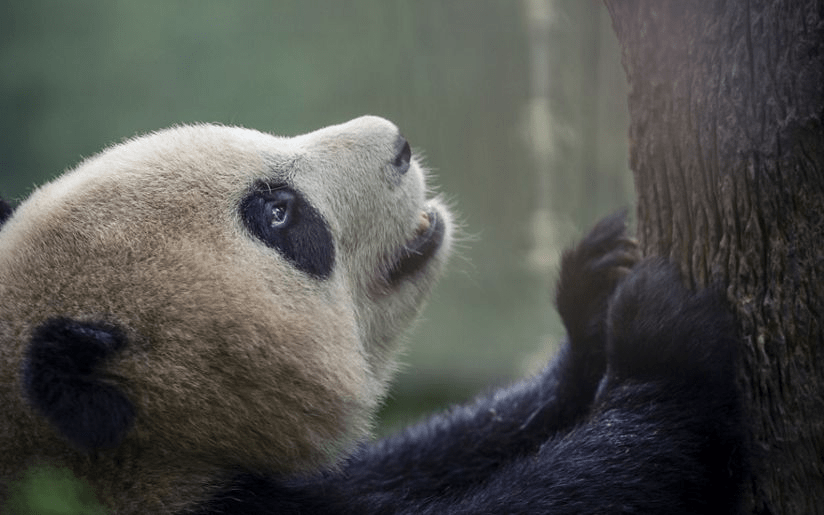
Giant Pandas were already incredibly rare before humans – Usually just one panda cub would survive. However, adding poaching and habitat loss makes it extremely difficult to survive for any species, even one as amazing as this.
Giant Pandas are still suffering from deforestation and habitat loss. Thankfully, these beautiful animals are a resilient species. Studies show that their populations are slowly returning with human help, though not as fast as we’d like. Captive breeding centers are slowly reintroducing these miraculous species back into the wild.
Below are two videos, about protecting and learning about pandas in china.
Note: If you’d like to check out other endangered species, or submit a request, submit the feedback form in the lower left corner, and check out this link for a collection of many animals, and their statuses.
Please consider donating to WWF, since they work directly with the Chinese Government!
Thank you for reading!
Remember, Change for Climate Change!
Useful Links
WikiHow, Nature, WWF (This link is very helpful. I definitely recommend donating, as they work directly with the environment), San Diego Zoo, WWF other page (This is helpful for why you should care), Pandas International, Because Tees (This helps with day-to-day things
Discover more from Climate Change
Subscribe to get the latest posts sent to your email.

 Climate Change